
Personal Finance Mistakes Indians Make in Their 20s: Brutal Honest Truth
Nobody is coming to save you financially.
Not your degree. Not your employer. Not your relatives. Not the motivational reels you watch at midnight and forget by morning. Your financial future depends almost entirely on your own discipline, your ability to dodge stupid decisions, and your consistency over the next 10 to 15 years.
That is the thing most personal finance content in India is too polite to say out loud.
I learned this the hard way. There was a point where I did not have enough savings or a proper emergency fund. Not because I was not earning. Because I had not built the habit of protecting myself financially before spending. That feeling of being financially exposed with no cushion behind you is one of the worst feelings a young person can have. It is quiet, constant, and it follows you everywhere.
I also watched a close friend spend money on an iPhone upgrade purely for the image. Not because the old phone stopped working. Because the new one looked expensive and sent a message. That money could have been the start of an SIP. Instead it became a depreciating object sitting in a pocket, impressing nobody who actually mattered.
These are not rare stories. These personal finance mistakes are happening every single day across India. This article is every personal finance mistake I wish someone had named clearly before I made them.

Personal Finance Mistake 1: Chasing Fast Money Instead of Building Real Skills
This personal finance mistake costs more than any other on this list. Not because of the money you lose. Because of the time and focus you lose chasing the wrong thing.
A lot of people in their 20s waste years on shortcuts. Options trading with zero knowledge. Crypto hype cycles they read about on Twitter. Vague business opportunities that need more investment than they ever return. Random side hustles with no real skill behind them. Flex culture that eats income faster than it arrives.
I did this personally. I opened a trading account to make fast money. I lost my entire capital in one options trade on a Monday morning. Held a PE option over the weekend expecting multiple returns. Lost 50% the moment the market opened. Held on hoping it would recover. Lost everything in the next hour.
The money hurt. But the bigger personal finance mistake was the months I spent focused on fast returns instead of building something real. That time does not come back.
The smarter path is genuinely boring. Build a high income skill. Stay consistent for years. Invest regularly no matter how small the amount. Avoid catastrophic personal finance mistakes. Repeat without stopping.
Compounding looks almost pointless for the first few years. Then suddenly it looks completely unfair. The people who understood this personal finance basic at 22 are the ones who look like overnight successes at 32. They were not overnight. They were just consistent while everyone else was chasing shortcuts that never arrived.
Personal Finance Mistake 2: The Lifestyle Trap Nobody Admits They Are In
Almost everyone falls into this personal finance mistake at least once. The trap is not spending money. The trap is spending money to perform for other people.
People in their 20s buy expensive phones, shoes, bikes, watches, dinners, and subscriptions mainly because they want validation. Not because they deeply need or even want these things. Social media has made middle class Indians try to imitate rich lifestyles on middle class incomes. The result is savings that never grow and a low level financial stress that follows you everywhere quietly.
My parent taught me something about money that stuck. Money is materialistic. You can earn it back. What you cannot earn back is your health, so never burn yourself out chasing it. That is true. But the extension of that lesson is also true. Do not burn your money chasing things that only look good from the outside.
The dangerous part of this personal finance mistake is that lifestyle inflation becomes permanent. Your income rises but your expenses rise faster. The 20,000 rupee phone becomes a 50,000 rupee phone. Occasional dinners out become weekly. One EMI becomes five EMIs running at the same time.
A phone bought because it does what you need is a smart purchase. A 1 lakh rupee phone bought to look wealthy to classmates is insecurity wearing a brand logo. That phone depreciates the moment you open the box. That same 1 lakh rupee invested in an index fund for ten years at 12% annual returns would be worth over 3 lakh rupees.
Most people making this personal finance mistake are broke quietly and pretending loudly. The expensive gadgets and lifestyle content are funded by savings that do not exist and investments that never started.
You do not need to look rich in your 20s. You need to actually become rich in your 30s and 40s. Those are completely different goals requiring completely different daily decisions.

Personal Finance Mistake 3: Having No Financial System
Most young Indians have no financial system at all and this personal finance mistake is so common it has started to feel normal.
Money comes in. They spend. Whatever remains becomes savings. If nothing remains they tell themselves they will save more next month. Next month arrives and the same thing happens again.
That is not a plan. That is hoping, and hoping is one of the most expensive personal finance mistakes you can make consistently over years.
The correct order of personal finance is not earn, spend, save whatever is left. It is earn, save and invest first, then spend what remains. That one reversal changes everything. When investing comes before spending it is not optional anymore. It happens every month without requiring willpower in the moment because the decision was already made before the money touched your account.
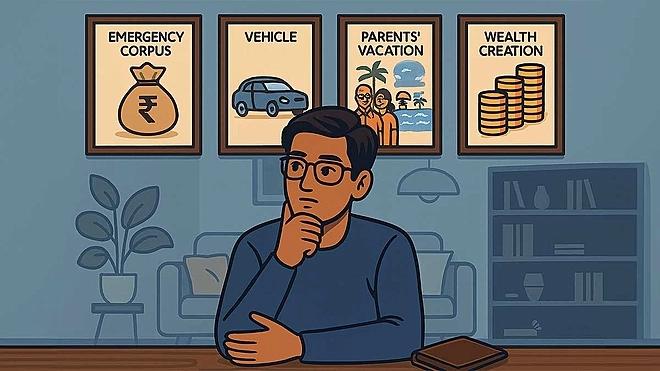
Even a simple structure beats complete chaos. An emergency fund covering three to six months of expenses so you never feel that exposed feeling I described at the start. A monthly SIP into an index fund. A budget for skill building. Controlled spending on everything else.
Without this structure, income disappears invisibly. You earn reasonably, have nothing to show six months later, and genuinely cannot explain where it went. This personal finance mistake compounds negatively over years. Every month without investing is a month of compounding you can never recover.
Personal Finance Mistake 4: Relying on One Income Source
One income source is one point of failure and treating it as permanent security is a personal finance mistake that catches millions of Indians off guard.
This personal finance mistake does not feel like a mistake when everything is running smoothly. Your salary arrives every month. Life continues. Then your company downsizes, your industry gets disrupted, your health forces time off, or any number of real things happen that personal finance textbooks never prepare you for. Suddenly your one income source stops and there is nothing behind it.
The solution is not complicated but it needs to start early. Build a second income stream alongside your primary income before you urgently need one. Freelancing in your existing skill. A content platform. Dividend income from investments built consistently. A small service business on the side.
The goal in your 20s is not to immediately replace your salary. The goal is to make sure your financial survival is never entirely dependent on one entity deciding to keep paying you.
Most Indians also make the connected personal finance mistake of building a lifestyle that requires their exact current salary to function. Home loan EMI eating 40% of salary. Car loan on top. Lifestyle expenses filling the rest. Zero tolerance for any disruption. That is financial fragility disguised as financial progress and it is one of the most common personal finance mistakes among young urban professionals in India today.
Personal Finance Mistake 5: Taking Bad Debt
Not all debt is a personal finance mistake. A home loan at a reasonable rate for a property you genuinely need makes sense. A loan for education that demonstrably increases your earning capacity can work if the numbers add up.
Bad debt is the personal finance mistake. Credit card balances carried month to month at 36% to 48% annual interest. Personal loans for vacations, weddings, or gadgets. Buy now pay later schemes for things you could not afford and did not need. EMIs stacked on top of EMIs until your monthly outflow has no connection to your actual financial situation.
Bad debt is uniquely destructive as a personal finance mistake because it is invisible in the short term and catastrophic over time. Taking a personal loan for a trip feels fine the day you book it. Twelve months later you are still paying EMIs for a holiday that ended a year ago while being unable to invest anything because too much income is already committed elsewhere.
The rule is simple. Never take debt for things that depreciate or disappear. Never carry a credit card balance month to month. If you cannot pay for something in full within a month from your regular income, you cannot afford it yet.
The Reserve Bank of India has clear guidelines on responsible borrowing at “rbi.org.in” that are worth reading before you take on any debt in India.
Personal Finance Mistake 6: Never Starting Because the Amount Feels Too Small
This is the personal finance mistake of waiting. Waiting until you earn more. Waiting until you understand more. Waiting until the market is at the right level. Waiting until life feels more certain.
The market is always uncertain. Life is always uncertain. There is never a perfect moment and every month you wait is compounding working against you instead of for you.
If you start a SIP of 3000 rupees per month at 23 and earn 12% annual returns you will have approximately 1.7 crore rupees by 60. Wait until 30 to start the same SIP and you end up with roughly 70 lakh rupees. You waited 7 years and lost 1 crore rupees. Not because you invested less total. Because you started late.
The personal finance mistake is believing small amounts do not matter. They matter enormously. 500 rupees per month invested at 22 is worth more than 5000 rupees per month invested at 32. Start with whatever you have today. Increase every time your income increases. Never stop.
You can start a SIP in minutes through SEBI regulated mutual funds. AMFI maintains a list of all registered mutual funds in India at <a href=”https://www.amfiindia.com”>amfiindia.com</a>.
Personal Finance Mistake 7: Skipping Financial Education
Most young Indians spend more time researching which phone to buy than understanding how money works. That personal finance mistake has consequences that last decades.
Financial education does not mean becoming an expert in everything. It means understanding the basics well enough to make decent decisions and recognise bad ones. How inflation erodes savings. How compound interest builds wealth. How taxes work on different types of income. Why an LIC endowment plan is not the investment your relative claims it is.
This personal finance knowledge gap is exploited constantly. Bank relationship managers selling ULIPs. Insurance agents pushing policies with 4% returns dressed up as investments. Brokers encouraging frequent trading because their commission depends on your activity. Without basic financial education you cannot tell the difference between advice and a sales pitch dressed as advice.
The best free resource for financial education in India is Zerodha Varsity. It covers investing, trading, and personal finance from absolute basics to advanced concepts at zero cost. One hour a week for six months will put your financial knowledge ahead of most peers and help you avoid the personal finance mistakes that cost people the most.
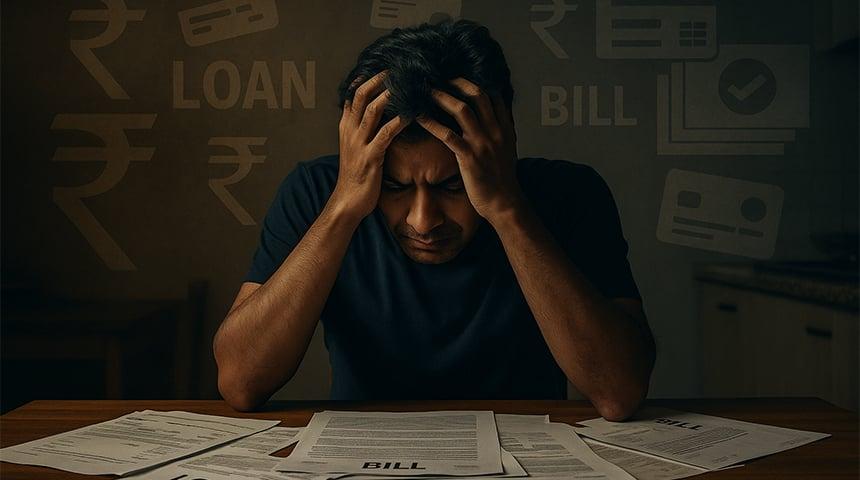
The Real Cost of Personal Finance Mistakes Over a Lifetime
The reason personal finance mistakes hurt so badly in India is not the individual mistake itself. It is the compounding cost of that personal finance mistake over 10, 20, and 30 years. One personal finance mistake made at 22, like skipping investments for three years, does not just cost you the money you did not invest.
It costs you the compounded growth of that money over four decades. Personal finance mistakes are not linear. They compound in the wrong direction just as aggressively as good personal finance decisions compound in the right direction.
Every personal finance mistake you make today has a future value attached to it that most people never calculate because the number is too uncomfortable to face. Start calculating. It will change how seriously you treat every personal finance decision from this point forward and make you think twice before making the same personal finance mistakes that most Indians make silently and repeatedly throughout their 20s.
Why Most Indians Keep Repeating the Same Personal Finance Mistakes
The reason personal finance mistakes repeat across generations in India is simple. Nobody teaches this in school. Nobody talks about it honestly at home. And the financial industry profits from your personal finance mistakes far more than it profits from your success.
Banks earn more when you carry credit card debt. Insurance agents earn more when you buy bad policies. Brokers earn more when you trade frequently and make personal finance mistakes in the market. The entire system is not designed to prevent your personal finance mistakes. It is designed to monetise them quietly. The only real protection is personal finance education you actively seek out yourself.
Every personal finance mistake in this article is avoidable with basic knowledge. The people who avoid these personal finance mistakes are not smarter or luckier than everyone else. They simply learned the rules of the game before they started playing it.
That is the entire difference. Learn the rules. Avoid the personal finance mistakes. Stay consistent for 15 years. The results will look completely unfair to everyone around you who chose shortcuts instead.
Personal Finance Mistakes Are Expensive But Fixable.The good news about personal finance mistakes is that most of them are fixable if you catch them early enough. The personal finance mistakes covered in this article are not permanent life sentences.
Missing investments for two years is a personal finance mistake you can recover from by starting today and staying consistent. Carrying bad debt is a personal finance mistake you can fix by stopping new debt and aggressively clearing existing balances.
Having no financial system is a personal finance mistake that disappears the moment you set up an automated SIP and an emergency fund. The personal finance mistakes that are truly expensive are the ones you keep making for five, ten, fifteen years without recognising them as mistakes at all.
That is the version of personal finance mistakes that quietly steals decades of compounding from people who worked hard their entire lives and still ended up financially stressed. Identify your personal finance mistakes now. Fix them one at a time. The earlier you catch personal finance mistakes the cheaper they are to correct.
How to Stop Making Personal Finance Mistakes Starting Today
Stopping personal finance mistakes does not require a financial degree or a large salary. It requires honesty about which personal finance mistakes you are currently making and a simple system to replace bad habits with better ones. Write down every personal finance mistake from this article that applies to your life right now. Not the ones that apply to other people. The ones that apply to you specifically.
That list of personal finance mistakes is your actual financial to do list. Start with the personal finance mistake that is costing you the most right now, whether that is bad debt, no investments, lifestyle inflation, or a missing emergency fund. Fix that one personal finance mistake completely before moving to the next.
This approach to correcting personal finance mistakes one at a time is slower than trying to fix everything simultaneously but it actually works. Most people who try to fix all their personal finance mistakes at once fix none of them because the change feels too overwhelming to sustain.
FAQ: Personal Finance Mistakes India
What is the most common personal finance mistake Indians make in their 20s?
The most common personal finance mistake is having no financial system at all. Money arrives, gets spent, and nothing is invested consistently. The fix is straightforward: automate your investments at the start of every month before spending anything else. This one change fixes more personal finance mistakes than any other single action.
How do I avoid lifestyle inflation as a personal finance mistake in India?
Every time your income increases, immediately increase your investment amount before you increase your lifestyle expenses. If your salary goes up by 10,000 rupees, move at least 5,000 of that into investments the same month. This is the most effective way to prevent the lifestyle inflation personal finance mistake from taking hold permanently.
Is taking a personal loan always a personal finance mistake in India?
Not always. A personal loan for a medical emergency or a course that genuinely increases your earning capacity can make sense. A personal loan for a vacation, wedding, gadgets, or anything that depreciates or disappears is always a personal finance mistake at Indian interest rates of 12% to 24% per year.
What is the best first step to correct personal finance mistakes in India?
Build an emergency fund and start a monthly SIP simultaneously. Even 500 rupees in each is a better start than waiting to have more money. Building the habit matters more than the amount when you are correcting personal finance mistakes from scratch.
How does social media worsen personal finance mistakes for young Indians?
Social media creates constant visibility into other people’s consumption that previous generations never experienced. Seeing peers with expensive gadgets, holidays, and lifestyles creates pressure to match that consumption regardless of whether you can actually afford it. Most of what you see online is either funded by debt or a curated highlight hiding real financial stress. This social pressure is the engine behind most lifestyle related personal finance mistakes in urban India today.
At what age should Indians start taking personal finance seriously to avoid these mistakes?
The moment you receive any money at all. Pocket money, a part time income, a first salary. Every year of compounding you miss in your early 20s is expensive to replace later. The personal finance mistakes made between 20 and 25 follow people into their 30s and 40s in ways that feel completely disproportionate to the original decision.
How do I build multiple income sources to avoid single salary personal finance mistakes?
Start by monetising the skill you already use in your primary job. If you are a designer take freelance projects. If you are a developer build something small on the side. If you are in marketing consult for small businesses. The goal is not to replace your salary immediately. It is to have income coming from somewhere else before you ever desperately need it.